
 Image 1 of 2
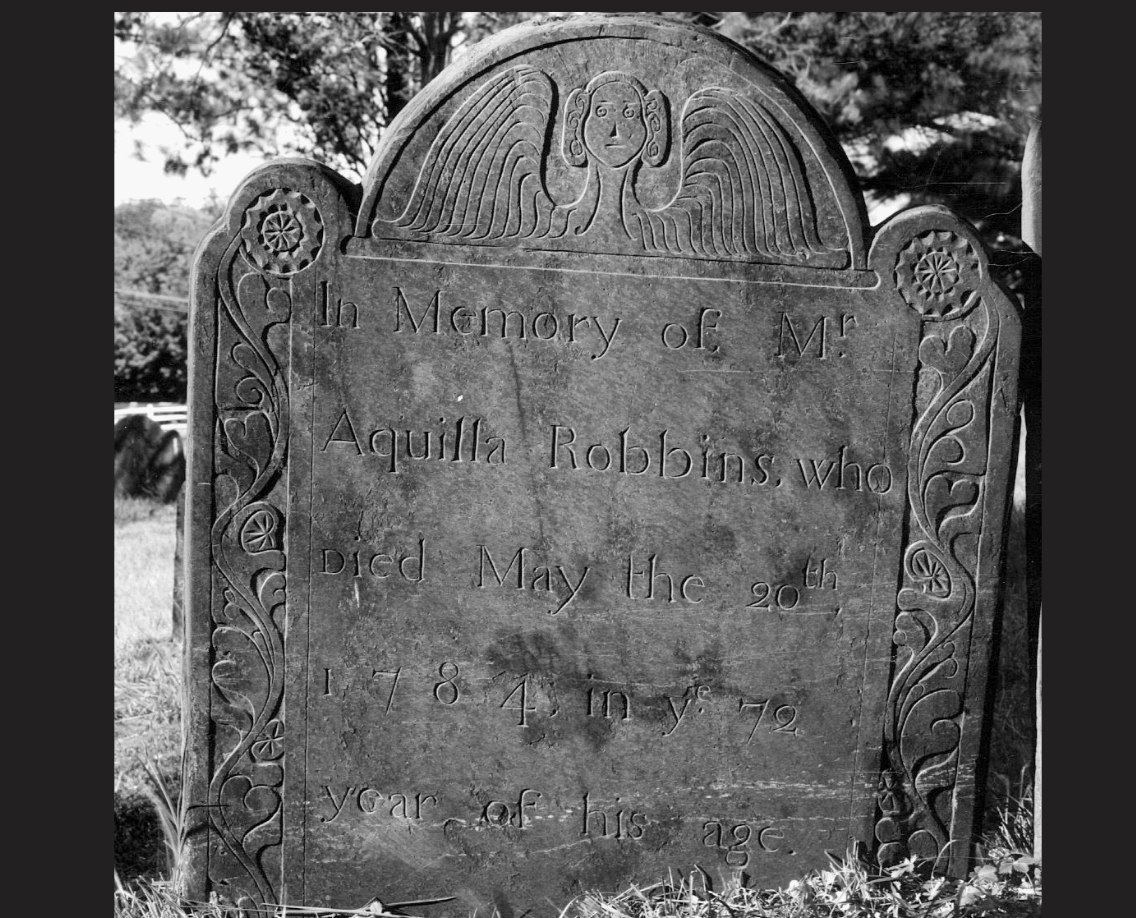 Image 2 of 2
This design features a soul effigy gravestone rubbing from the gravestone of Aquilla Robbins (1712-1784) in Walpole, Massachusetts. The original slate marker is tentatively attributed to Joseph Barbur (1731–1812), known as the “Frond Carver of West Medway” for his distinctive botanical ornamentation.
Although this soul effigy differs from Barbur's more recognizable designs in its hairstyle and wing shape, its flattened facial features, elongated neck, and careful attention to the rendering of hair are characteristic of his work. The intricate botanical borders and distinctive lettering further suggest his hand, making this an intriguing possible variation within his body of eighteenth-century New England funerary carvings.
The soul effigy marked an evolution in New England funerary art from the mid 1700s to early 1800s. As Puritan influence waned, grim death’s heads (stylized skulls with wings) softened into more human-like figures, signifying a more optimistic view of the soul’s ascent. Popular throughout the Northeast from the mid 1700s to early 1800s, soul effigies varied stylistically by region and carver.
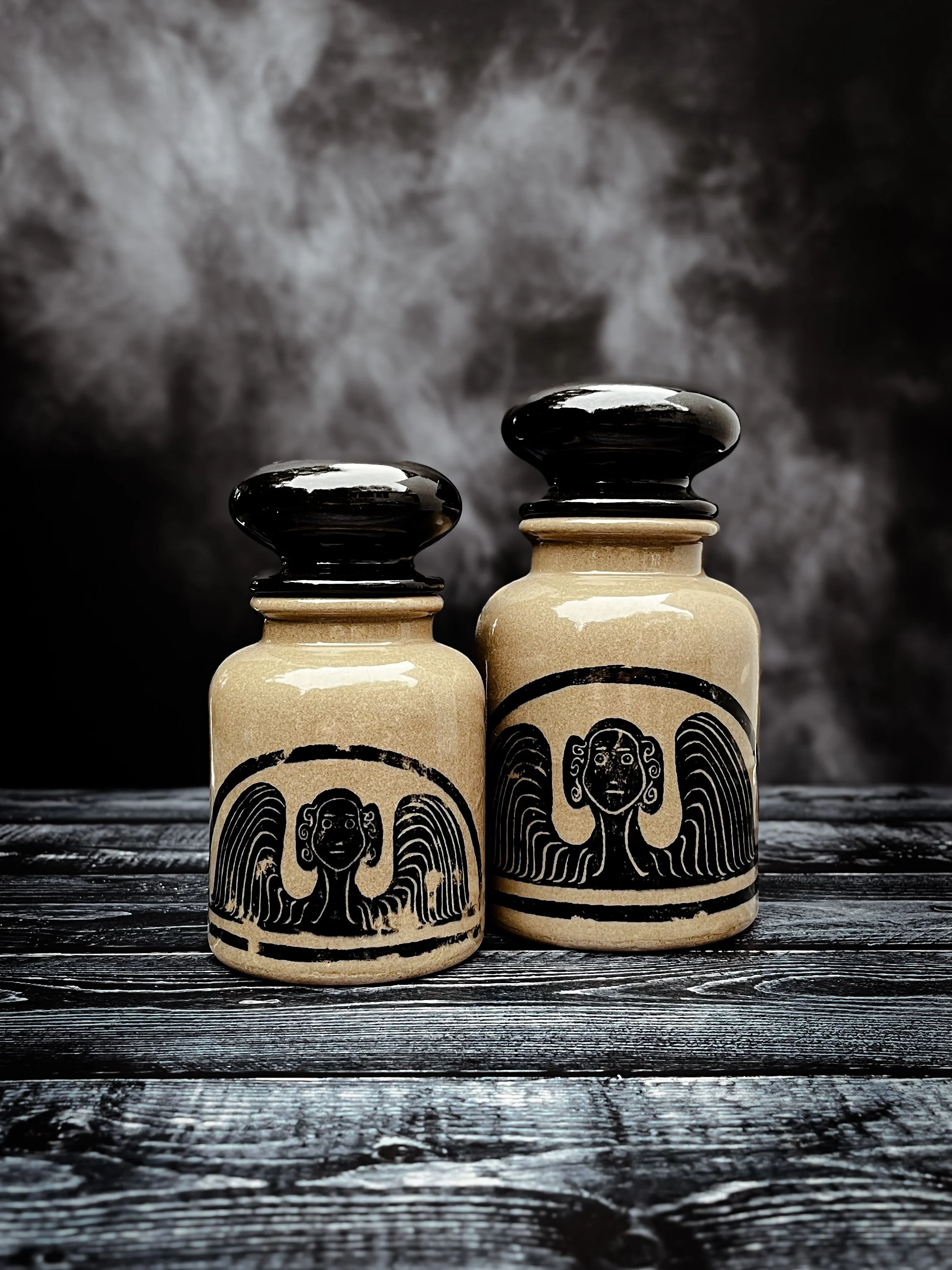
I’ve adapted a vintage gravestone rubbing of this effigy into a silkscreen, then printed it onto speckled gray slipcast stoneware, cast from a vintage mold and glazed for a glossy finish. Available in two sizes, each jar is a contemporary tribute to colonial New England gravestone carving and the enduring memento mori symbolism of the soul effigy.
The larger jar measures approximately 3.5 inches in diameter and 6.5 inches tall with the lid on.
The smaller jar measures approximately 3 inches in diameter and 5.5 inches tall with the lid on.
Please note: Each piece is handmade, and small variations are to be expected. The photos shown are representative of the design, but not the exact jar you will receive—making each item one of a kind.


